Editor’s Message
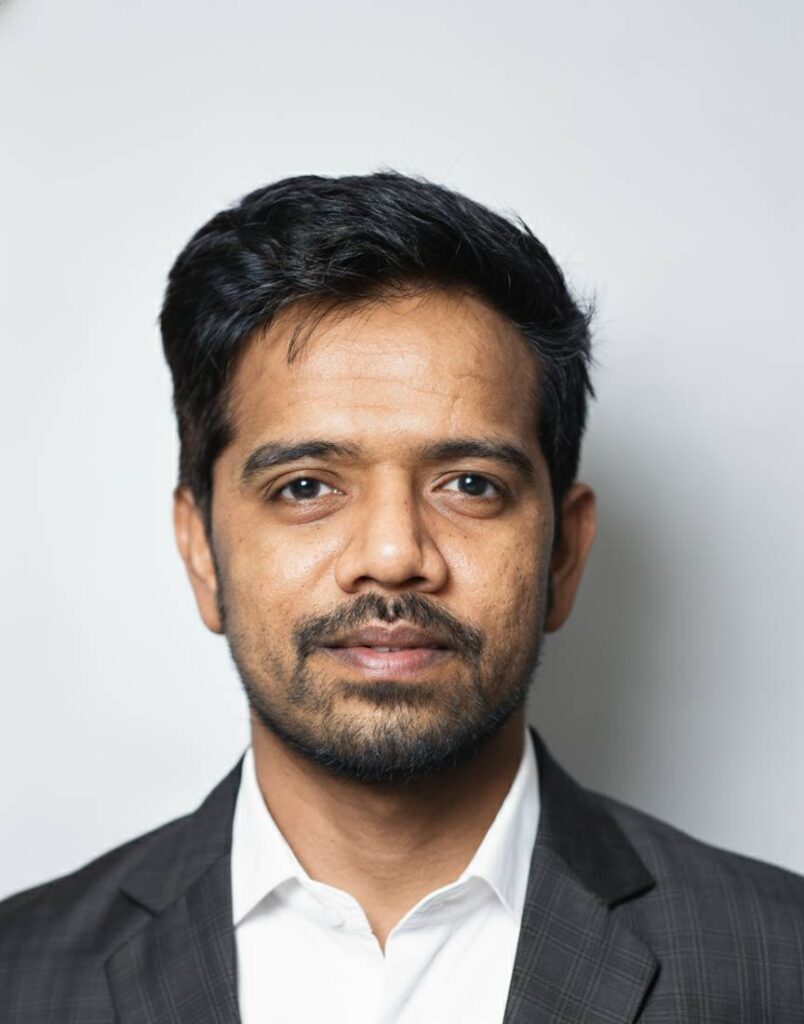
Manish Manohare, Assistant Professor, Indian Institute of Technology, Delhi, mpmanohare@iitd.ac.in
This issue marks both a continuation and a shift. Noise control engineering has long been grounded in measurement, regulation, and compliance. These foundations remain essential. Yet as our cities grow denser, technologies evolve, and public awareness deepens, it is becoming increasingly clear that acoustics cannot remain confined to mitigation alone. The conversation must expand.
In this issue of Noise News International, we explore a broader framing of environmental acoustics, one that moves beyond the decibel as the sole reference point and toward a more holistic understanding of how sound shapes human experience. The articles gathered here reflect a field in transition. They ask not only how we control noise, but how we design, evaluate, and interpret the acoustic environments in which people live and work.
We begin with a conceptual challenge to conventional practice. The idea that soundscapes should be treated as a design parameter rather than a byproduct encourages us to reconsider long-held assumptions. Energy-based metrics remain indispensable, but they do not fully capture perception, context, or lived experience. By engaging with soundscape principles and structured frameworks such as the Noise Footprint approach, this issue opens a dialogue on integrating qualitative insight with quantitative rigor.
At the same time, regulatory and policy dimensions remain central. Comparative perspectives on environmental noise governance reveal how different regions approach common challenges. Whether examining global differences in exposure assessment or reviewing construction noise monitoring practices across multiple countries, these contributions highlight the importance of coherent frameworks, enforcement mechanisms, and public transparency. Standards and guidelines are not static documents. They evolve alongside technology, urban form, and societal expectations.
The urgency of these discussions becomes especially visible in rapidly developing regions. Case studies addressing traffic noise, occupational exposure, and urban management in diverse national contexts remind us that acoustic challenges are deeply embedded in local realities. Cultural practices, transportation patterns, and infrastructure constraints all influence outcomes. Effective solutions must therefore be context sensitive, technically sound, and socially informed.
This issue also turns attention to specific intersections where noise carries complex implications. The paradox of train horns underscores the delicate balance between immediate safety and long term health. Research on youth exposure raises questions about generational vulnerability and cognitive development. Analyses linking acoustic quality to property value demonstrate that noise is not merely an environmental variable but an economic one. The issue also reflects on the growing acoustic implications of recreational activities, particularly the impulsive sound characteristics associated with racket sports facilities that are increasingly appearing within urban residential environments. Together, these perspectives reinforce that sound influences health, equity, and urban resilience in measurable ways.
Looking ahead, advances in sensing technologies and Artificial Intelligence are redefining what is possible in monitoring and analysis. Directional systems and source specific identification allow for more precise diagnostics and more targeted interventions. Such tools strengthen enforcement and planning, but they also support a design oriented future in which we understand not only how loud an environment is, but what composes it.
As editor, I see this issue as more than a collection of articles. It represents a commitment to widening the scope of our discipline while remaining grounded in technical excellence. My own work has often engaged with the intersection of measurement, perception, and public health, and I am continually reminded that the most meaningful progress occurs when engineering precision meets human context. I hope this edition encourages that synthesis.
Thank you for being part of this community of practitioners, researchers, and policy makers. Your engagement sustains the relevance of this publication and shapes its direction. I look forward to building on this dialogue in the future.