The Sound of Duty: Can a ‘Dose-Capped’ Algorithm Save India’s Traffic Cops from Deafening Intersections?

Dateline: India; Tier 2 City
For the millions navigating India’s chaotic intersections daily, the blare of horns, the roar of trucks, and the screech of brakes are just part of the urban fabric. But for the traffic police officer standing in the middle of that symphony for eight to twelve hours a day, it’s an occupational hazard with a measurable cost: their hearing.
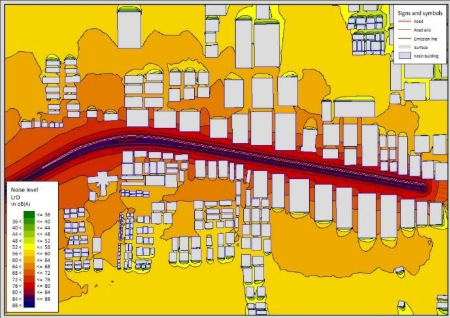
A growing body of evidence from Indian cities—from Surat and Nagpur to Chandigarh—paints a worrying picture. Traffic police are showing alarming rates of noise-induced hearing loss, tinnitus (a persistent ringing in the ears), and stress-related symptoms. Studies routinely find intersection noise levels breaching the 65 dB(A) limit set for commercial areas, often spiking into the mid-90s due to a uniquely Indian phenomenon: a chaotic, heterogeneous mix of vehicles where honking is not just an alert, but a primary mode of communication.
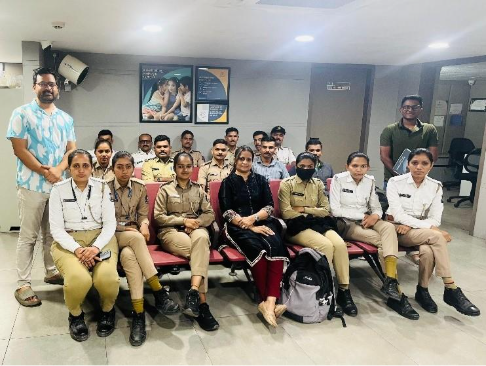
“The problem is that we are trying to manage a 21st-century health risk with a 20th-century roster system,” explains a traffic management expert familiar with the new research. “An officer’s exposure is currently left to chance, depending on which intersection they’re posted to on a given day. We need to treat noise like a pollutant we can measure and cap.”
The solution is as innovative as it is logical: treat duty rostering as an “exposure-allocation problem.” Instead of rotating personnel arbitrarily, they have developed a “dose-capped rotation” algorithm designed to ensure no officer’s cumulative noise exposure exceeds a safe daily limit, while still ensuring every junction is manned.
This approach moves beyond the traditional—and often ineffective—reliance on personal protective equipment (PPE), such as earplugs, which can be impractical for officers who need to hear traffic and communicate. It aims to tackle the hazard at its source by managing the time spent in it.
The Indian Noise Cocktail
The acoustic environment of an Indian intersection is a world apart from its Western counterparts. In many developed nations, strategic noise mapping and action plans are common, and traffic streams are relatively homogeneous with stricter lane discipline. India’s Noise Pollution (Regulation and Control) Rules, 2000, provide ambient limits, but enforcement and systematic action planning are inconsistent.
The reality on the ground is a “heterogeneous” stream where two-wheelers, auto-rickshaws, overloaded trucks, and cars jostle for space. This friction, combined with frequent stop-go movement at signals, creates a sound profile dominated by peak events.
“Horn honking isn’t just a background irritant; it’s a major contributor to the total noise dose,” notes a recent field study from Nagpur. The research found that honking can add 2-5 dB(A) to baseline traffic noise and, in some conditions, can spike common noise indicators by double digits. That’s the difference between a “borderline” shift and a “hazardous” one.
How the ‘Dose-Capped’ Model Works
The proposed model is a sophisticated, data-driven roster. Its core principle is borrowed from industrial occupational safety: the daily noise dose.
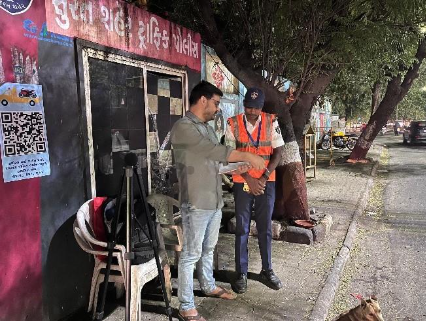
First, every traffic post (intersection) is categorised based on its “dose rate.” Using portable sound level meters like those shown earlier, authorities would measure two key metrics:
- LAeq: The average energy-equivalent sound level over a period
- Lmax: The maximum peaks caused by honking or sudden acceleration
A high-exposure post (e.g., a large, clogged intersection with heavy truck traffic) might have an hourly “dose rate” equivalent to 40% of an officer’s safe daily limit under standards set by bodies like the US National Institute for Occupational Safety and Health (NIOSH). A medium post might be 10%, and a low post (like a quiet side street) might be just 2-3%.
The algorithm, which can be implemented initially as a simple spreadsheet tool, then builds an 8-hour shift block by block. Its goal is to assign officers to posts so that their cumulative dose remains below 100%. It prioritises fairness, ensuring the burden of high-exposure posts is shared equitably.
A worked example with four officers shows the logic in action. To cover one high-exposure post for an entire 8-hour shift without exceeding the dose cap, the model automatically distributes the “high post” hours. In the example schedule, each officer spends only 2 hours at the loudest intersection, then rotates through medium- and low-noise posts or performs low-exposure relief duties for the rest of their shift.
“The beauty of the algorithm is that it makes the staffing problem visible,” the expert explains. “If you don’t have enough officers to cover a high post for 8 hours without someone going over the cap, the model flags an ‘infeasibility.’ It’s a management signal that says, ‘You either need more staff, or you need to reduce the noise at that intersection itself.'”
A Six-Month Roadmap to Quieter Duty
Implementing such a system doesn’t require an overnight complete overhaul. The proposal outlines a pragmatic six-month pilot program that could be rolled out in any major Indian city.
Phase 1 – Measurement (Months 1-2): Create a “post library” for a specific traffic zone. Use portable sound meters to measure LAeq and peak levels during peak and off-peak hours, and classify each post as High, Medium, or Low exposure using gradient maps like the one shown earlier.
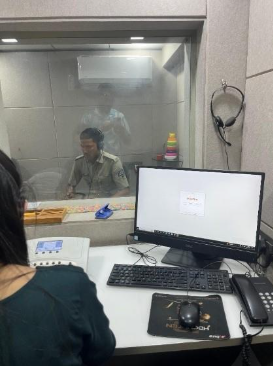
Phase 2 – Modelling (Month 3): Run the dose-capped algorithm to generate a draft roster. Simultaneously, conduct baseline health screenings (audiometry tests and stress questionnaires) for all participating officers.
Phase 3 – Pilot Operations (Months 4-5): Train supervisors and roll out the new rotation. Log any exceptions caused by VIP movements or incidents.
Phase 4 – Evaluation (Month 6): Re-measure noise levels and re-screen the officers’ hearing. Compare the results against the baseline to quantify the intervention’s effectiveness.
The key stakeholders extend beyond the police department. It requires coordination with municipal bodies (for potential intersection redesign) and state pollution control boards, creating a multi-agency approach to a public health issue.
From Feasibility to Force Multiplication
The biggest anticipated barriers are not technical, but operational. Staffing shortages are a reality in most Indian cities. The algorithm might reveal that, to truly protect personnel, a zone needs 20% more officers, or that the only way to keep officers safe at a particular intersection is to implement engineering controls—such as better signal timing or enforced no-honking zones—to lower its baseline dose rate.
Furthermore, resistance from within the ranks is possible if the rotation is seen as unfair. The solution, proponents argue, is transparency. If every officer can see that the roster is generated by a formula designed to evenly distribute the acoustic burden, acceptance is more likely.
The integration of modern sound measurement technology, data analytics platforms, and a deep understanding of local traffic conditions creates a holistic approach that respects both the professional demands on traffic police and their fundamental right to a safe working environment.
“We’re not just talking about protecting hearing,” we conclude. “Chronic noise exposure is linked to hypertension, stress, and sleep disturbance. By implementing a dose-capped rotation, we acknowledge that the health of the person directing traffic is just as important as the traffic they direct. It’s about building a smarter, safer, and more sustainable system for the people who keep our cities moving.”