What is All the Noise About?
Bad noise problems can turn into positives
By Jim Thompson
We have all been there. A project or a test is going badly and there seems to be no way to make it work. Over the course of my career, I have learned to stay calm and sometimes it does work out. This is one example that I always remember when things look bad.

I was working for a tire company, and we were working with an original equipment manufacturer (OEM) on a new vehicle. This program was a major departure for the OEM – they were using four-wheel independent suspension on a mainstream sedan. I was called in because there was a major noise problem.
It only took a little time for me to determine that the real problem was wear. We had a major problem with uneven wear on the vehicle, and this wear problem was creating noise issues. Although everyone understood the issue was irregular wear, I went to the next test session with the customer to answer questions about noise.
We were still seeing uneven wear, and the tires design team was at a loss as to how to fix the problem. We were talking about this when one of the OEM mechanics walked up and told us we should not be so upset that they were shooting shocks through the read windows a few weeks ago. At least ours was not the only problem. I was in the position of having to say I would do what I could about the noise while knowing there was nothing I could do if the wear problem continued. I got the usual question from my higher-level management. Isn’t there something you can do to show the customer we are trying? There was not a thing I could do. The product development team had done all they could do to fight the wear issue. The problem was the vehicle, not our tires.
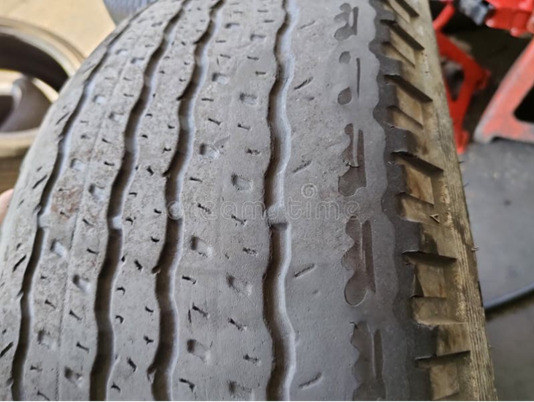
Later as we were in the final stages of the vehicle program, a decision was made to decline the business on this vehicle. The company had never done this before. At times, business had been declined in the past because the price the customer was willing to pay was too low, but never had it been done for a technical reason. There was a lot of concern about this decision.
An important aspect was that the OEM had told us we were the only tire with this problem. Some of the high-level people in our organization were pointing fingers at the tire designers. Those of us who were involved int the program knew the problem was the vehicle and suspected that our competitors were having the same problem.
The vehicle went into production. There was a great deal of publicity, and the OEM won awards for the innovative design of the vehicle. Roughly four months after the vehicle was in full production the two largest car rental companies in the US came to us. They wanted us to provide a tire that did not have this irregular wear problem. They were getting complaints from customers about the noise from the tires.
We explained that we could not fix the problem with tires. Taking a risk, we went on to explain the problem was in the manufacture of the vehicles. Evidently, the two competitors who were sourced on the vehicle never brought this up to the rental car companies. They asked if we could show the OEM how to fix the problem. We said yes, but it would require a big investment from the OEM.
The rental car companies had some influence on the OEMs. They buy a lot of cars, and many customers buy cars after experiencing them as rentals. So, when they took our story to the OEM who was also getting complaints from regular customers around the country, they got action. We ran a large program with the OEM and several other vendors to make changes to the OEM production lines. This work generated millions of dollars in income – far surpassing what we would have gotten from the original tire sourcing. In addition, we were sourced exclusively on this vehicle for the next few years.

At the point where we declined the business, there were major concerns. Would the OEM take other business from us? Would they see us negatively in other programs because of this? How would this loss of income affect our bottom line? After we talked with the car rental companies, there still were people saying we should not get involved in OEM production. Even if we were successful, the OEM’s production people would hate us, and they could cause a lot of problems for us.
The result was good for our bottom line. Our relationship with the OEM and the car rental companies dramatically improved. We learned a lot about the OEM’s production process and potential improvements. It is not an exaggeration to say we went from the depths of despair to the heights of success over the course of this program. After the production process was modified, there were some car magazines that noted the low vehicle interior noise.
Although this was not totally about acoustics, it is not uncommon to find noise problems being part of larger product or production issues. I would be interested to hear about your similar experiences.