ISO 9613-2:2024-01 Impact Assessment of Noise Modelling Procedure in Wind Power Projects
By M.Sc. Carlo Di Napoli, Principal Consultant, AFRY Finland Oy, carlo.dinapoli@afry.com, Dr. Erkki Heikkola, Senior Consultant, AFRY Finland Oy, and Dr. Mika Laitinen, Senior Consultant, AFRY Finland Oy
In Finland, the National Noise Modelling Guidelines for Wind Power Projects YM 2/2014 provide instructions for applying ISO 9613-2 standard in the environmental impact assessment (EIA procedure) and detailed zoning. The original version of the standard (Edition 1) is from 1996, which was in force at the time of publication of the guidelines until January 2024, when the latest version of the standard, ISO 9613-2:2024-01 (Edition 2), was published. Since then, the calculation procedures of the latest standard version have been implemented in various noise modelling software during 2024–2025.
Preliminary impact assessment calculations for three wind farms (Figure 1) indicated a need for a more detailed analysis. Comparison of the Edition 2 and Edition 1 calculation results showed roughly 5 dB higher results further away from the wind farm when calculating with Ed.2 standard. It was concluded that for certain projects, this could represent a moderate planning-phase risk.
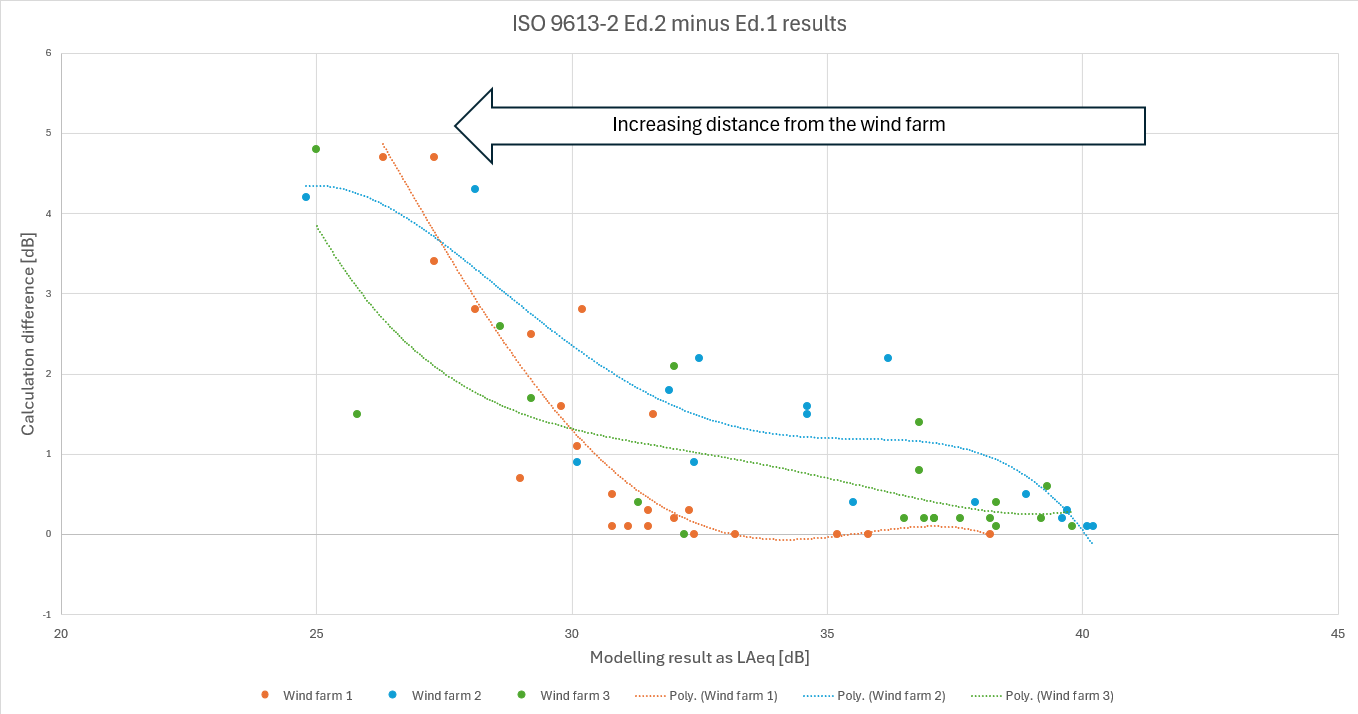
Figure 1: Modelling result difference of three different wind farms cases
The calculations were performed in a simplified test environment. The two ISO 9613-2 versions offer multiple modelling options. However, Finnish wind turbine noise modelling follows the national guidelines (2014), which define how the standard is applied. As a result, only some of the changes made to the standard will cause changes to the noise modelling of wind turbines in Finland.
For wind turbine noise modelling, the most significant changes in the standard versions relate to obstacle modelling. Terrain obstacles prevent a direct line of sight between the noise source and the object exposed to the noise. The noise attenuation effect of a terrain obstacle is presented with the term ‘Abar’, described in chapter 7.4 of the standard documents, which is calculated using different formulas in the 1996 and 2024 standard versions.
The tests showed that the 1996 and 2024 editions model noise attenuation behind terrain barriers differently: The 1996 formulas generally produce greater attenuation, while the 2024 formulas result in higher predicted noise levels when a terrain obstacle lies between the turbine and receiver. The noise barrier attenuation seems unrealistically high in some situations with the 1996 formulas, and small changes in the location of the object exposed to noise can produce surprisingly sharp jumps in the attenuation. The 2024 standard version probably aims to avoid overestimating the attenuation caused by the obstacle and to produce a more consistent and reliable estimate of the noise level.
The 2024 standard version includes an informative appendix D related to wind power modelling, which was not included in the 1996 version. For example, it recommends limiting the terrain obstacle attenuation term (Abar) to 3 dB in hilly terrain to improve accuracy. The use of this limiter will clearly increase noise levels when the noise is heavily obstructed by terrain. However, this informative appendix is not considered as part of the current National modelling guideline.
The 2024 standard version also includes methods for modelling the effect of wind direction and the directivity of the noise source on noise. These methods have no effect on the noise modelling of wind turbines in Finland, because according to the noise modelling guide 2014, the noise of a wind turbine is modelled as a omnidirectional point source in downwind conditions.
Methodology
In the test environment, artificial terrain elevation data has been generated, with 0–2 terrain obstacles between the wind turbine and the receptors. The point source describing the wind turbine is on the left side at the origin of the coordinate system, the height of the obstacles varies only in one direction, and the shape of the obstacle remains constant in the transverse direction. There are 11 receptors at 500–1500 m from the sound source every 100 m. The calculation was carried out using AFRY’s own wind power noise application AFRY-Numerola Noise, in which the simulation of the noise propagation of wind turbines has been carried out in accordance with the basic versions of the 1996 and 2024 standards.
Results
The results of the 1996 standard version are presented in the graphs as large dots and the results of the 2024 standard version as smaller dots. The height of the obstacle is shown on the y-axis on the left side of the graph, and the result of the sound pressure is shown on the y-axis on the right side of the graph. In addition, the lower graph shows the difference in the sound level of each test (2024-1996).
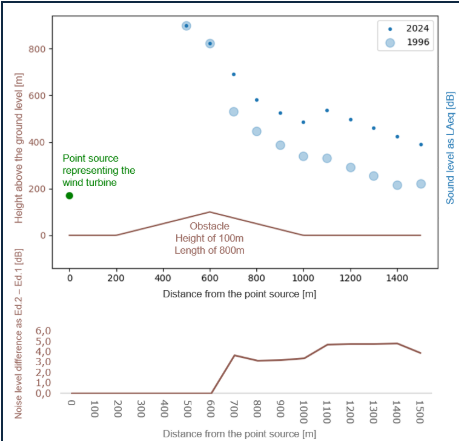
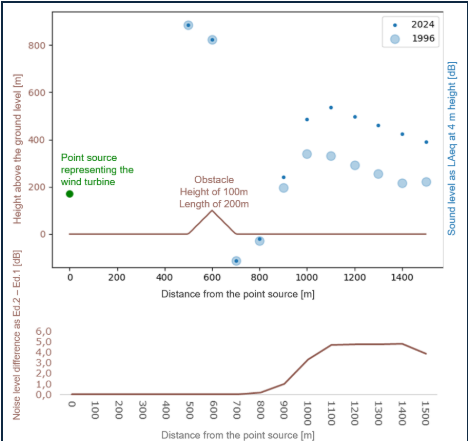
Figure 2: Modelling results of two different test cases
In the left-hand test case (Figure 2), the difference between the standards reached 4.8 dB at 1100 m and exceeded 3.7 dB from 700 m onwards, where the turbine was no longer visible from the receptor. The difference remained significant at 1500 m, the limit of the modelling area. Similar results were observed in the right-hand test case, with differences increasing from 0.2 dB at 800 m to a maximum of 4.8 dB at 1100 m.
To verify the test observations, the calculations according to the ISO 9631-2 standard were carried out in addition to the AFRY program using two commercial software, SoundPlan and CadnaA.
Conclusions
The calculation examples showed that ISO 9613-2:2024 predicts higher noise levels than the 1996 edition when there is a terrain obstacle between the hub of the wind turbine and the object exposed to the noise. The effect was evident even for gentle terrain and extended beyond the 1500 m test range in some cases. Maximum differences reached 4.8 dB, with the 2024 edition consistently producing higher results. On flat ground, both editions gave identical noise levels.
In August 2025, ISO’s technical committee ISO/TC 43/SC 1 has decided to start producing the 3rd version of the standard (ISO/AWI 9613-2).
Acknowledgments
Financial support for this work was provided by Ministry of Environment Finland. The authors owe great thanks for the financial support.
Author’s biography
Carlo Di Napoli (M.Sc. Tech.) has over twenty years of experience in industrial noise assessments. These assignments have included 3D modeling, measurements, consulting, education and research covering especially wind, energy and mining industries. He has previous experience from the conventional power sector guarantee testing (gas turbines, steam turbines and boilers) and European Union emission trading auditing and verification as a Lead Verifier. Currently he is working as a Principal Consultant, Environment Vantaa, Finland.
Bibliography
Ministry of the Environment Finland 2/2014. Modelling the noise of wind turbines, Environmental Administration Guidelines 2|2014 (available in Finnish and Swedish languages only).
ISO 9613-2:2024 and:1996. Acoustics — Attenuation of sound during propagation outdoors. Part 2: Engineering method for the prediction of sound pressure levels outdoors. International Organization for Standardization, Switzerland.
ISO/AWI 9613-2 – Acoustics — Attenuation of sound during propagation outdoors — Part 2: Engineering method for the prediction of sound pressure levels outdoors. International Organization for Standardization, Switzerland.